티스토리 수익 글 보기
Stay informed. Sign up for CC’s newsletter.
Tag: AI
Why Digital Public Goods, including AI, Should Depend on Open Data
Policy

Acknowledging that some data should not be shared (for moral, ethical and/or privacy reasons) and some cannot be shared (for legal or other reasons), Creative Commons (CC) thinks there is value in incentivizing the creation, sharing, and use of open data to advance knowledge production. As open communities continue to imagine, design, and build digital…
Six Insights on Preference Signals for AI Training
Events, Licenses & Tools, Policy, Technology
“Eagle Traffic Signals – 1970s” by RS 1990 is licensed via CC BY-NC-SA 2.0.. At the intersection of rapid advancements in generative AI and our ongoing strategy refresh, we’ve been deeply engaged in researching, analyzing, and fostering conversations about AI and value alignment. Our goal is to ensure that our legal and technical infrastructure remains…
Questions for Consideration on AI & the Commons
About CC, Licenses & Tools, Policy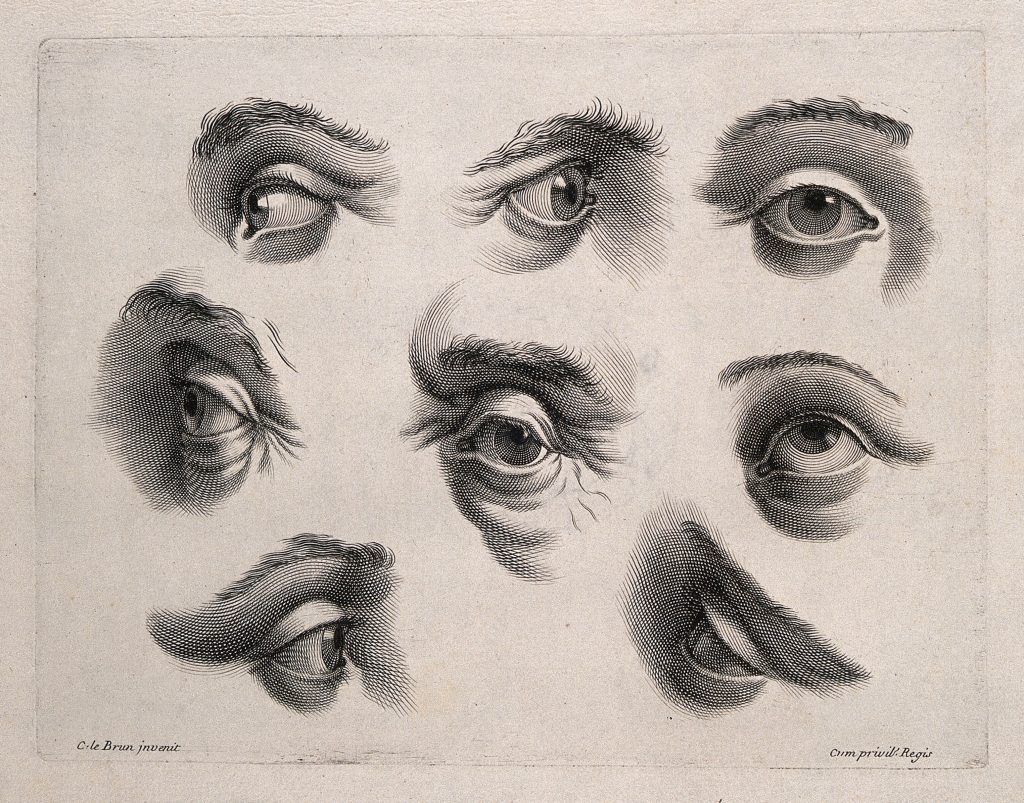
“Eight eyes. Engraving after C. Le Brun” by Charles Le Brun is licensed via CC0. The intersection of AI, copyright, creativity, and the commons has been a focal point of conversations within our community for the past couple of years. We’ve hosted intimate roundtables, organized workshops at conferences, and run public events, digging into the…
Recap & Recording: “Open Culture in the Age of AI: Concerns, Hopes and Opportunities”
Open Culture, Open Heritage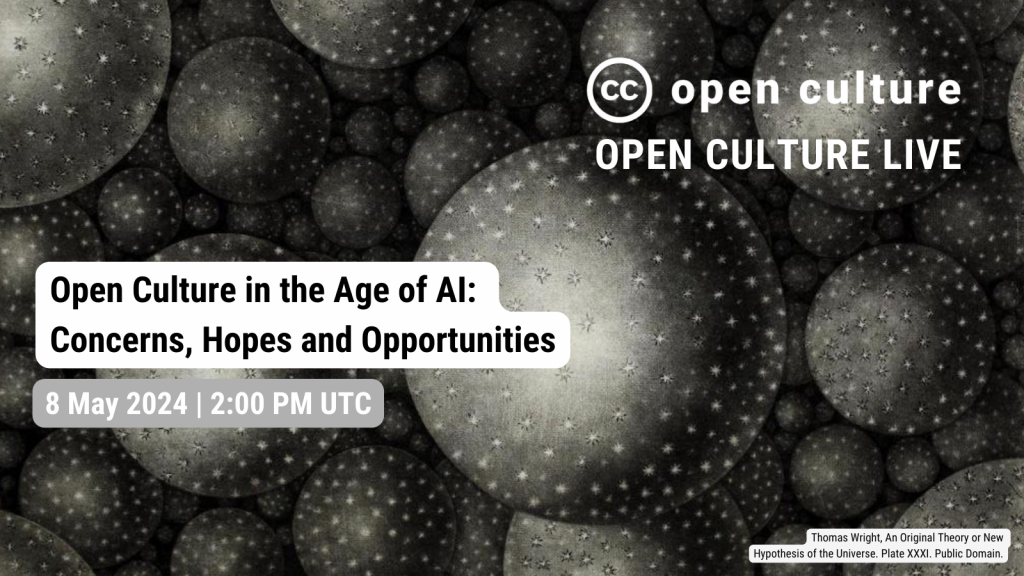
In May, CC’s Open Culture Program hosted a new webinar in our Open Culture Live series titled “Open Culture in the Age of AI: Concerns, Hopes and Opportunities.” In this blog post we share key takeaways and a link to the recording.
Webinar: Open Culture in the Age of AI: Concerns, Hopes and Opportunities
Open Culture
On Wednesday, 8 May 2024, at 2:00 pm UTC, CC’s Open Culture Program will be hosting a new webinar in our Open Culture Live series titled “Open Culture in the Age of AI: Concerns, Hopes and Opportunities.”
Exploring a Books Data Commons for AI Training
Policy
What role do books play in training AI models, and how might digitized books be made widely accessible for the purposes of training AI? What dataset of books could be constructed and under what circumstances? A new paper investigates the concept of a responsibly designed, broadly accessible dataset of digitized books to be used in training AI models.
CC Joins Civil Society Letter Urging U.S. to Support Openness and Transparency in AI
Policy

CC joins civil society letter urging U.S. to support openness and transparency in AI.
EU adopts landmark Artificial Intelligence Act
Copyright
Creative Commons welcomes the adoption by the European Parliament of the EU’s Artificial Intelligence Act. We engaged intensively with EU policymakers to safeguard the appropriate interplay with EU copyright legislation. The EU must now ensure implementation allows broad, open access to harness the full potential of generative AI whilst enforcing the safeguards provided.
On Openness & Copyright, EU AI Act Final Version Appears to Include Promising Changes
Better Internet, Policy
The EU’s political institutions announced that they have reached a tentative final agreement. While details are still not finalized and many questions remain regarding treatment of certain high-risk systems, the agreement appears promising relative to the recent Parliament text and from the perspective of supporting open source, open science, as well as on copyright.
CC Responds to the United States Copyright Office Notice of Inquiry on Copyright and Artificial Intelligence
Better Internet, Copyright, Licenses & Tools, Technology
In August, the United States Copyright Office issued a Notice of Inquiry seeking public responses to 34 questions (and several sub-questions) about the intersection of copyright law and artificial intelligence. The comment period closed on 30 October with over 10,000 individuals and organizations responding, representing a broad spectrum of interests on how copyright should apply in relation to generative AI. CC joined in the conversation to provide our own thoughts on copyright and AI to the copyright office.